

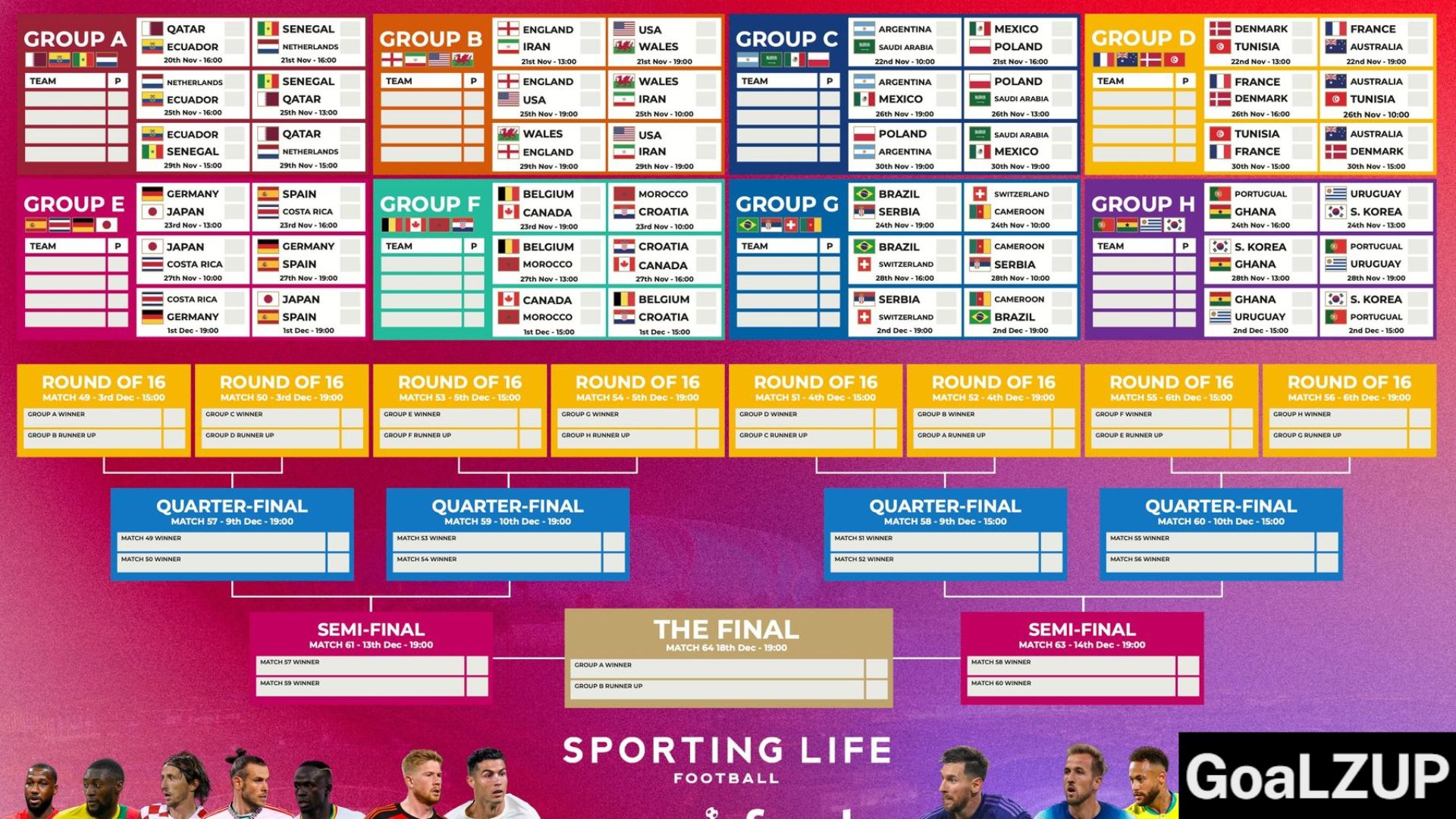
A late-night goal in London. A sunrise serve in Melbourne. A midday touchdown in Dallas. The world of sports does not sleep. Plus, the clock is always against us. You are a die-hard fan. You want to see every second of the action.
However, the planet is a giant sphere with twenty-four different time slices. This reality makes a Time Zone Match Timing Guide essential for your survival. Total confusion is a common enemy. A missed kickoff is a tragedy. Let us fix that now.
The Great Divide: GMT vs UTC
First of all, we must understand the base of the clock. Most fans talk about GMT. This stands for Greenwich Mean Time. It has a long history. It started in 1847 with the Railway Clearing House. Later, a big meeting in 1884 made the Greenwich Meridian the official zero-degree line for longitude. This mean solar time is observed at the Royal Observatory in London.
UTC is the newer standard. It stands for Coordinated Universal Time. It replaced GMT as the primary standard in 1972. It uses atomic clocks and accounts for the rotation of the Earth. Why does this matter to you? It is more accurate. UTC does not observe Daylight Saving Time. It remains a constant line. Therefore, it is the perfect anchor for a meeting scheduler time zone or a sports schedule planner.
The Math of the Match
Calculate the difference to avoid heartbreak. Each place has an “offset” from UTC. Some are positive. Some are negative. For example, New York City is usually UTC-5 during standard time. Abu Dhabi is UTC+4.
The calculation is a simple subtraction task. Take your local UTC value. Subtract the UTC value of the other city. If you are in New York and the match is in Abu Dhabi, the difference is nine hours. If it is 5:00 PM in New York, it is 2:00 AM the next day in Abu Dhabi. A real headache for sleep. On top of that, you must know if the city is to your left or right on the map. Cities to the right are ahead. Cities to the left are behind.
Essential Tools for the Global Fan
You do not have to do the math alone. Many online resources act as a time zone overlap visualizer. They show you when your waking hours match the game time.
- Every Time Zone: This tool provides a visual timeline for many cities like London, Mumbai, and Tokyo. It makes a multi time zone clock online easy to read.
- Timezone.io: This site helps you visualize where everyone is. It is great if you have a group of friends in different countries.
- FIO: This is a Google Chrome extension. It shows multiple zones every time you open a tab.
- World Clock Meeting Planner: This tool from timeanddate.com lets you pick dates and locations to find the perfect meeting time schedule for your watch party.
A meeting time planner poll is another great idea. Use it to see when your friends in Singapore (UTC+8) and Berlin (UTC+1) can all hop on a call to talk about the scores.
The “Follow-the-Sun” Fan Strategy
The business world uses a method called Follow-the-Sun (FTS). This is a global way to work where tasks move from one site to another across time zones. It reduces the time it takes to finish a project. In a study, this approach completed tasks 20.7% faster than teams in one location.
You can use this for sports. Round-the-clock action is possible. Additionally, you can pass the “watch” to a friend.
- Site A: You watch the morning games in San Francisco (PST UTC-8).
- Site B: Your friend in London (GMT) takes over for the afternoon matches.
- Site C: A buddy in Darwin, Australia (ACST UTC+9:30) catches the late-night cricket.
This ensures someone is always awake to track the news. A 24-hour cycle of fandom. No gaps. No missed drama.
The Trap of Daylight Saving Time
Daylight Saving Time (DST) is a major trap for the global fan. It is not sequential. It is not continuous. In the Northern Hemisphere, clocks “roll back” in the fall. In the Southern Hemisphere, this happens in the spring.
Take the Pacific Time Zone. The change happens at 2:00 AM on the last Sunday in October. The clock jumps from 1:59:59 AM back to 1:00:00 AM. Consequently, the time of 1:30 AM happens twice in one night. If your match starts at 1:30 AM, you might be an hour early or an hour late. On the contrary, the spring “roll forward” creates a hole. You lose an hour of your life. Plus, you might miss a whole quarter of a game.
Not all places use DST. Arizona in the US does not observe it. Many countries in Latin America have different start and end dates for DST, or they do not use it at all. Therefore, a multi time zone check is mandatory every week.
Global Hotspots and Their Offsets
Know the major cities to master the Time Zone Match Timing Guide.
- North America: New York is UTC-5. Chicago is UTC-6. Los Angeles is UTC-8.
- Europe: London is UTC+0 (Standard). Berlin is UTC+1.
- Asia: Mumbai is UTC+5:30. This is a strange half-hour offset. Tokyo is UTC+9.
- Oceania: Sydney is UTC+11 during certain parts of the year. Auckland is UTC+13.
A few countries have very specific times. Nepal adopted a UTC+5:45 offset in 1986. These fifteen-minute gaps are rare but real.
Planning Your Watch Party: Etiquette and Schedule
A time zone planner is more than a clock. It is a tool for social peace. You do not want to wake a friend at 3:00 AM with a loud phone call. Respect the local work hours of your fellow fans.
If you plan a group call for a big final, use a meeting scheduler time zone tool. Aim for “golden hours”. These are periods where most people are awake at the same time. Usually, this is a two-hour span. For example, 9:00 AM in Vancouver is 6:00 PM in Oslo. This works for both. However, that same time is midnight in Perth. That is not fair to the Australian fan. Rotate the times for your next meeting time schedule. Do not always inconvenience the same person.
Statistical Insights on Global Coordination
Data shows that coordination is hard. In a controlled experiment, distributed teams faced many challenges.
- Clarification costs are high.
- Delayed responses slow down the fun.
- Misunderstandings arise often.
The study found that using two sites is often the optimal number to manage time zone differences. If you add a third site, the speed might increase, but the confusion grows too. Therefore, keep your fan group small and focused across two main regions if possible.
Collaborative Environments for Fans
Technology makes it better.
- Slack: Update your status with your local time zone.
- Google Calendar: Set your working (or watching) hours.
- Zoom: Use it for live reactions. Record the session for friends who are asleep.
Asynchronous updates are also the norm now. Send a text or a clip. Your friend in London will see it in two hours. Your friend in Los Angeles will see it in twelve hours. Do not expect a quick response in the middle of their night.
The Cultural Aspect of Time
Time is not just numbers. It is culture. Leaders in East Asia (China, Japan, South Korea) often follow a hierarchical style. Fans there might wait for a “lead” fan to start the chat. In South Asia (India, Bangladesh, Sri Lanka), the style is often more flexible and cooperative. Understanding these small details improves your global fan group. Plus, it builds cultural competence.
Frequently Asked Questions
How to read time zones?
Read them as an “offset” from a central standard. This standard is usually UTC or GMT. A positive number like +5 means the place is five hours ahead of the standard. A negative number like -8 means it is eight hours behind.
How do I convert timezone to local time?
Take the base time of the event. Add or subtract the offset of your own location. For a more accurate result, use the formula: Time Difference = [UTC in local time] – [UTC in the other city]. Always check if you need to add or subtract based on whether the city is east or west of you.
Which timezone is GMT?
GMT is Greenwich Mean Time. It is the time at the Royal Observatory in London. It is the original standard that divided the world into time zones based on the zero-degree meridian.
Concluding Words
The sun never sets on the world of sports. Your Time Zone Match Timing Guide is your weapon against the dark. Use a multi time zone clock online. Check for time zone overlap often. Avoid the meeting scheduler time zone traps of October and March.
Gradually, you will become a master of the clock. You will know exactly when to meet time zones. You will never miss a goal again. Finally, the world is your stadium. The clock is just a detail.
